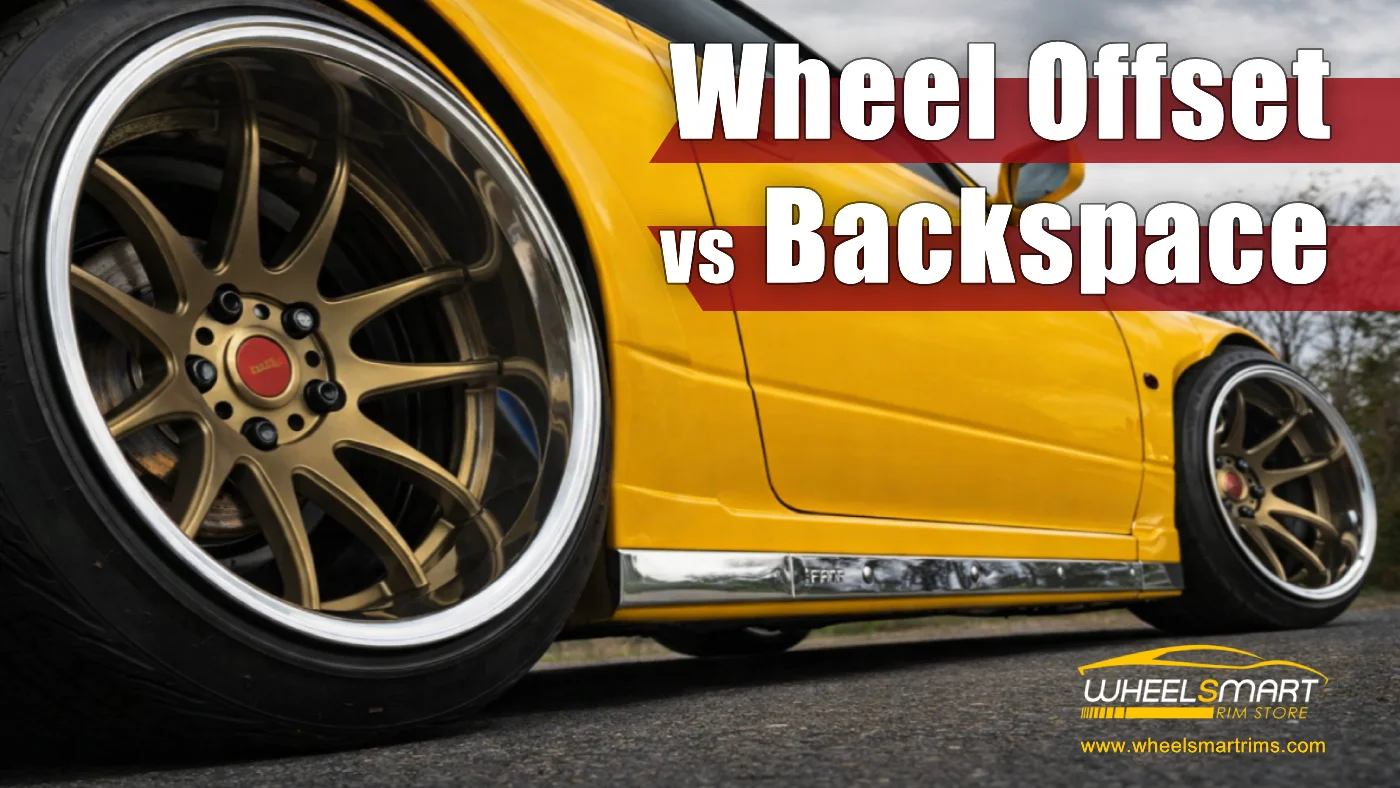
Why does one wheel listing show +35mm offset while another shows 5.5″ backspacing for the same wheel?
If you’re trying to understand the difference between wheel offset and backspacing, the answer comes down to how wheel position is measured.
Wheel offset and backspacing describe the same wheel position. Offset measures from the wheel centerline in millimeters. Backspacing measures from the inner lip in inches.
The automotive industry uses both systems depending on vehicle type and audience, which is why listings appear inconsistent.
This guide explains when each is used and how to translate between them instantly.
Before diving deeper, make sure you understand how wheel fitment works
Table of Contents
Offset and Backspacing Describe the Same Thing
Wheel offset and backspacing are two methods of measuring the distance between the wheel mounting surface and the wheel edges. They represent the same physical position using different reference points.
This is the key insight. Don’t skim past it.
Offset and backspacing both locate the mounting surface, the flat part that bolts to your hub. One critical difference between offset and backspacing is that they measure from different starting points.
Offset measures from the wheel’s centerline to the mounting surface. It uses millimeters.
Backspacing measures from the wheel’s inner lip to the mounting surface. It uses inches.
Neither is more accurate. Neither is better. They’re two rulers measuring the same door from opposite walls.
A wheel with +35mm offset and 5.5″ backspacing isn’t showing two different positions. It’s showing one position described two ways.
Once you understand this, every wheel spec listing makes sense.
What Is Wheel Offset?
Definition & How It’s Measured
Offset tells you how far the mounting surface sits from the wheel’s exact center.
Positive offset means the mounting surface sits toward the street side (outer face). Most passenger cars use positive offset. The wheel tucks inward toward the suspension.
Zero offset means the mounting surface aligns perfectly with the centerline. The wheel sits centered.
Negative offset means the mounting surface sits toward the brake side (inner face). The wheel pushes outward, creating more “poke” past the fender.
The number itself—whether +45 or -12—tells you exactly how many millimeters the mounting pad deviates from center. This is the most popular wheel position measurement.
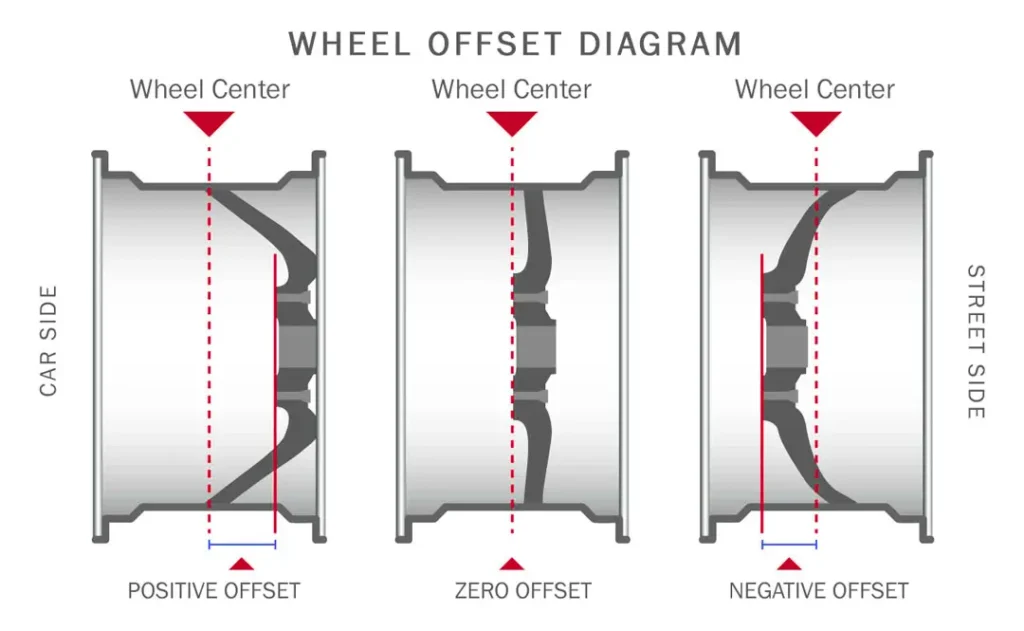
Positive, Zero, and Negative Offset
Here’s a quick reference:
| Offset Type | Mounting Surface Location | Common Use |
|---|---|---|
| Positive (+) | Toward the street side | Factory cars, SUVs |
| Zero (0) | Centered | Classic muscle cars |
| Negative (-) | Toward the car side | Toward the brake side |
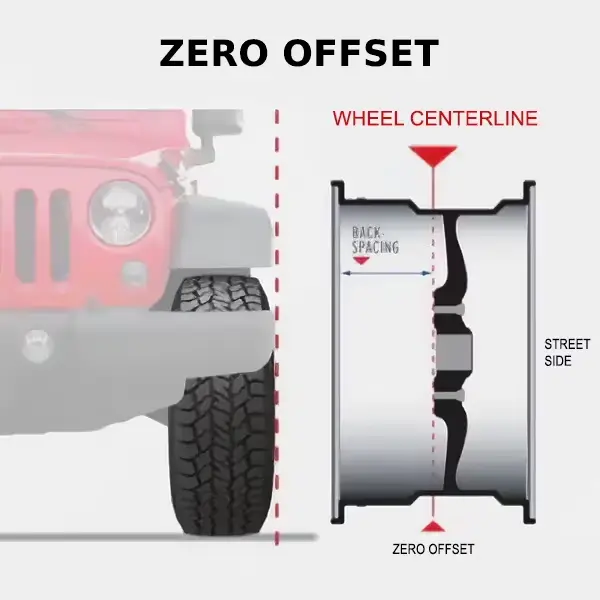
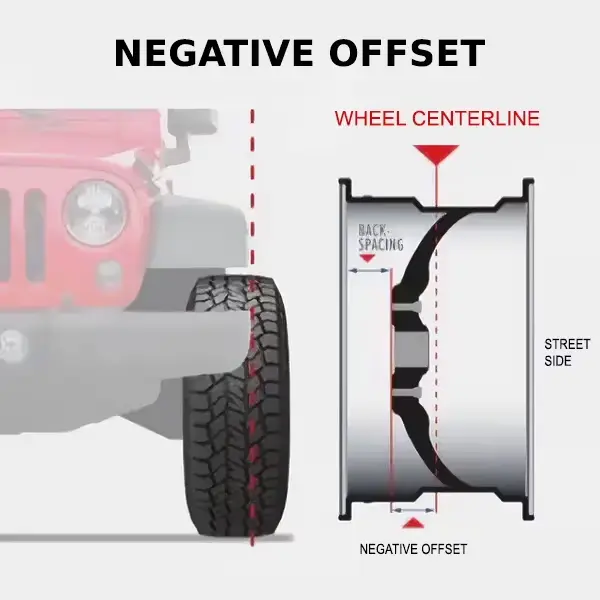
For a deeper breakdown of how wheel offset affects fitment, read our complete guide
What Is Wheel Backspacing?
Backspacing tells you the depth from the mounting surface to the wheel’s back edge.
More backspacing means the wheel sits deeper in the wheel well. Less backspacing means it sits further outward.
A wheel with 6 inches of backspacing tucks inward more than a wheel with 4 inches of backspacing, assuming equal widths.
The catch: Backspacing changes when wheel width changes, even if the mounting surface stays in the same place.
This is where most confusion starts.
The Key Difference: How Width Affects Each Measurement
The difference between offset and backspacing comes down to where the measurement begins.
Offset is measured from the centerline, so the number stays the same even when wheel width changes.
If the mounting surface sits 35mm from the centerline on a 7-inch wheel, it still sits 35mm from the centerline on a 9-inch wheel.
Backspacing is measured from the inner lip, so the number changes when the width changes, even if the mounting surface stays in the same place.
Backspacing changes automatically when you change the rim’s width.
Add an inch of wheel width, and the inner lip moves. Now the distance from that lip to the mounting surface is different, even though the mounting surface didn’t move.
Same position. Different backspacing number.
This is why comparing wheels by backspacing alone can mislead you. Two wheels with identical backspacing but different widths will sit in completely different positions.
Offset accounts for width automatically. Backspacing doesn’t.
For more details, see: Will Wheels Rub guide (future article) →
Why Some Manufacturers List Offset and Others List Backspacing
Car culture and truck culture evolved separately. So did their measurement preferences.
Passenger cars, imports, and European wheels typically list offset. The aftermarket performance industry adopted millimeters and centerline-based specs decades ago.
Trucks, off-road wheels, and American manufacturers often list backspacing. The measurement made sense for solid axle setups where inner clearance mattered most.
Today, you’ll find both systems everywhere. A wheel shop might list offset. The same wheel on a truck forum gets discussed in backspacing. Online retailers sometimes list both—sometimes only one.
Neither is wrong. You just need to know how to translate.
Which One Should I Match When Replacing Factory Wheels?
- Direct OEM replacement → match offset
- Aftermarket same size → match offset range
- Clearance measuring → use backspacing
- Custom fitment → convert between them
How To Convert Offset to Backspacing
You rarely need to calculate this manually, but if one site lists offset and another lists backspacing, this formula lets you confirm they’re describing the same setup.
Use this formula:
Backspacing
Backspacing = (Wheel Width ÷ 2) + (Offset ÷ 25.4)
Example:
An 8-inch wide wheel with +35mm offset.
- Half the width: 4 inches
- Offset in inches: 35mm ÷ 25.4 = 1.38 inches
- Backspacing: 4″ + 1.38 = 5.38 inches
How To Convert Backspacing to Offset
Again, you rarely need to calculate this yourself, but understanding it prevents ordering the wrong wheel.
Use this formula:
Offset
Offset = (Backspacing – (Wheel Width ÷ 2)) × 25.4
Example:
An 8-inch wide wheel with 5.5 inches of backspacing.
- Half the width: 4 inches
- Difference: 5.5″ − 4 = 1.5 inches
- Offset: 1.5″ × 25.4 = +38mm
Keep a calculator handy when cross-shopping wheels listed in different formats.
Which Measurement Should You Use?
Use offset when comparing wheels of different widths.
Offset isolates the mounting surface position. You can compare a 17×7.5 wheel to a 17×9 wheel directly. The offset numbers tell you exactly how their positions differ.
Use backspacing when checking inner clearance.
Backspacing tells you the physical depth of the wheel—how far it extends toward your brakes and suspension. If you’re measuring available space with a tape measure, backspacing matches that measurement directly.
Best practice: Know both numbers. Convert when needed. Don’t assume two wheels fit the same just because one number matches.
Practical Example: Same Position, Different Specs
A customer orders a wheel listed as:
18×9 +25mm offset
The fitment guide from a truck forum recommends:
18×9 with 5.5″ backspacing
Are these the same?
Let’s convert the offset to backspacing:
- Half width: 4.5 inches
- Offset in inches: 25 ÷ 25.4 = 0.98 inches
- Backspacing: 4.5 + 0.98 = 5.48 inches
Yes. These specs describe essentially the same wheel position. The forum recommendation matches.
No confusion. No wrong purchase.
Choosing the Right Setup for Your Vehicle
Before ordering wheels, gather this information:
- Factory wheel specifications (width, diameter, offset)
- Current tire size and any planned upgrades
- Suspension modifications (lifts, leveling kits, lowering springs)
- Intended use (daily driving, off-roading, track days)
Most drivers should stay within ±15mm of factory offset for trouble-free fitment. Truck owners planning lifts and larger tires have more flexibility to go aggressive.
When in doubt, consult a fitment specialist. At WheelSmart Rims, we offer both OEM wheels and premium certified replicas that meet recognized industry standards such as SAE, TUV, JWL, and VIA. Our team can help you find the exact specifications for your vehicle.
Frequently Asked Questions on Wheel Offset vs Backspacing
What is the difference between wheel offset and backspacing?
Both describe where the mounting surface sits. Offset measures from the wheel’s centerline in millimeters. Backspacing measures from the inner lip in inches. They describe the same position using different reference points.
How do you measure wheel offset vs backspacing?
Measure backspacing by laying the wheel face-down and measuring from the back lip to the mounting surface. Calculate offset using the formula: Offset = (Backspacing − Half Wheel Width) × 25.4.
Does offset or backspacing matter more for wheel fitment?
Both matter equally. Offset is more useful when comparing wheels of different widths. Backspacing tells you the physical depth for clearance checks. Use both measurements together for an accurate fitment.
Can you convert backspacing to offset?
Yes. Use this formula: Offset (mm) = (Backspacing − (Wheel Width ÷ 2)) × 25.4. You need the wheel’s total width in inches to perform the conversion.
Why do some wheels list offset and others list backspacing?
Car manufacturers and import wheels typically use offset (millimeters). Truck and off-road wheels often use backspacing (inches). Both systems describe the same measurement, just from different industries and reference points.
How does wheel width affect backspacing but not offset?
Offset measures from the centerline, which shifts proportionally with width—so the offset number stays constant. Backspacing measures from the inner lip, which moves when the width changes. The same mounting position can have different backspacing numbers at different widths.
You can now read any wheel listing, whether it shows offset, backspacing, or both.
You understand why the numbers differ and how to translate between them. No more second-guessing forum recommendations or cross-shopping confusion.