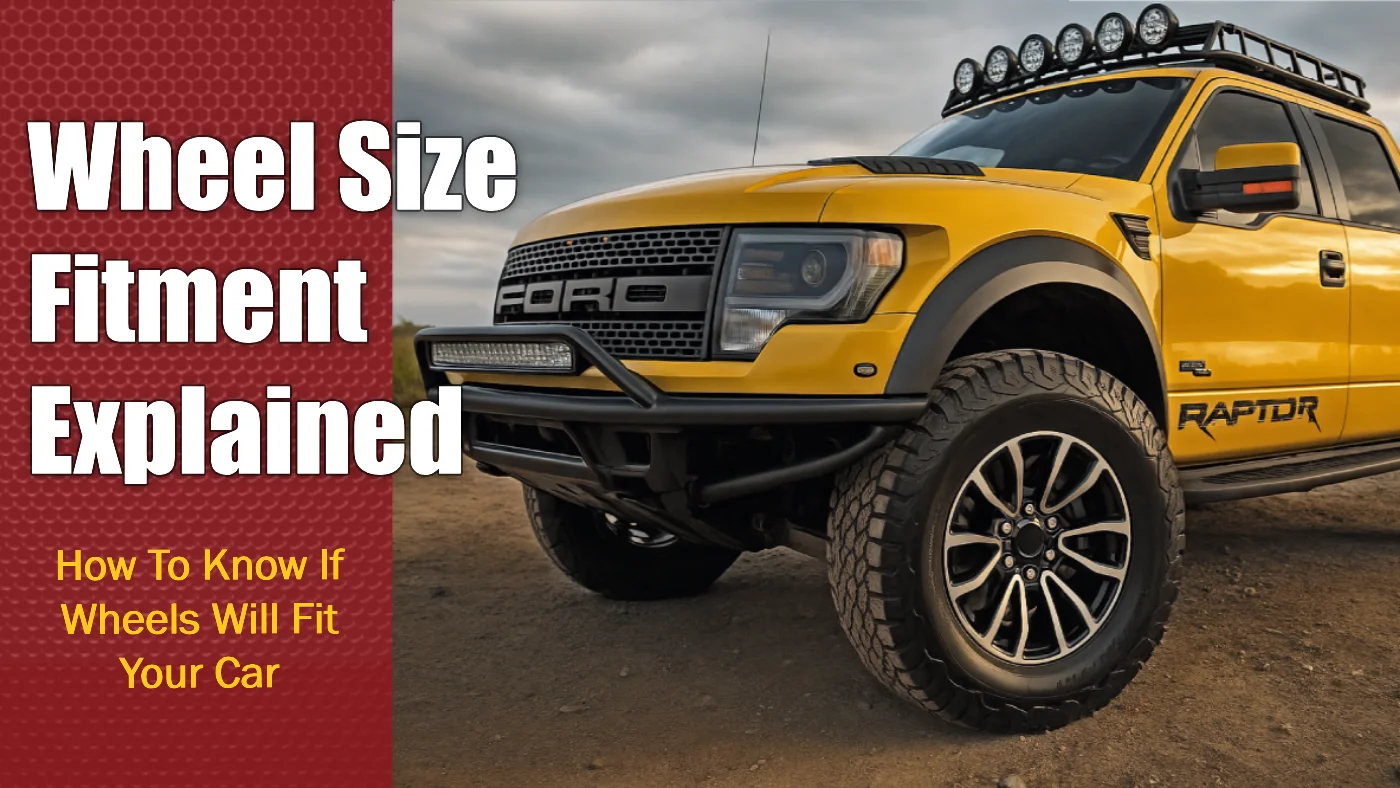
You’ve found the perfect wheels. They look incredible. Then you see the specs: 18×8.5 +35 5×114.3 CB 73.1. What does any of that mean? Will they even fit your car? If you’re wondering how to check wheel fitment or what wheels fit your car, the answer starts with understanding wheel position. This guide turns that confusion into confidence and shows you exactly how to check wheel fitment before ordering. You’ll learn exactly how to read wheel specs and know—before you buy—whether wheels will fit.
Table of Contents
What Wheel Fitment Means
Wheel fitment is the relationship between the wheel’s mounting position and the available space inside the wheel well.
A wheel fits when it clears suspension on the inside and fenders on the outside, during driving, turning, and over bumps.
Rims don’t fit because of their size. They fit or not because of position.
That single concept explains everything else on this page.
The Problem: Why Wheel Specs Confuse People
Those numbers aren’t random. Each one describes a specific measurement that affects fitment for good wheel size compatibility.
But nobody explains them clearly. Manufacturers assume you already know. Forums contradict each other. And one wrong purchase means returns, restocking fees, or worse, damaged components.
The real consequences of wrong fitment:
- Tires rubbing fenders on every turn
- Vibration at highway speeds
- Premature bearing wear
- Suspension components grinding against spokes
- Money wasted on wheels you can’t use
Here’s the good news. Fitment isn’t complicated once you understand what you’re measuring.
The Measurements That Control Fit vs The Ones That Allow Mounting
Not all specs matter equally. Some determine where the wheel sits. Others determine whether it bolts on at all.
Position Specs (Control Rubbing)
These three measurements decide if your wheel clears suspension and fenders.
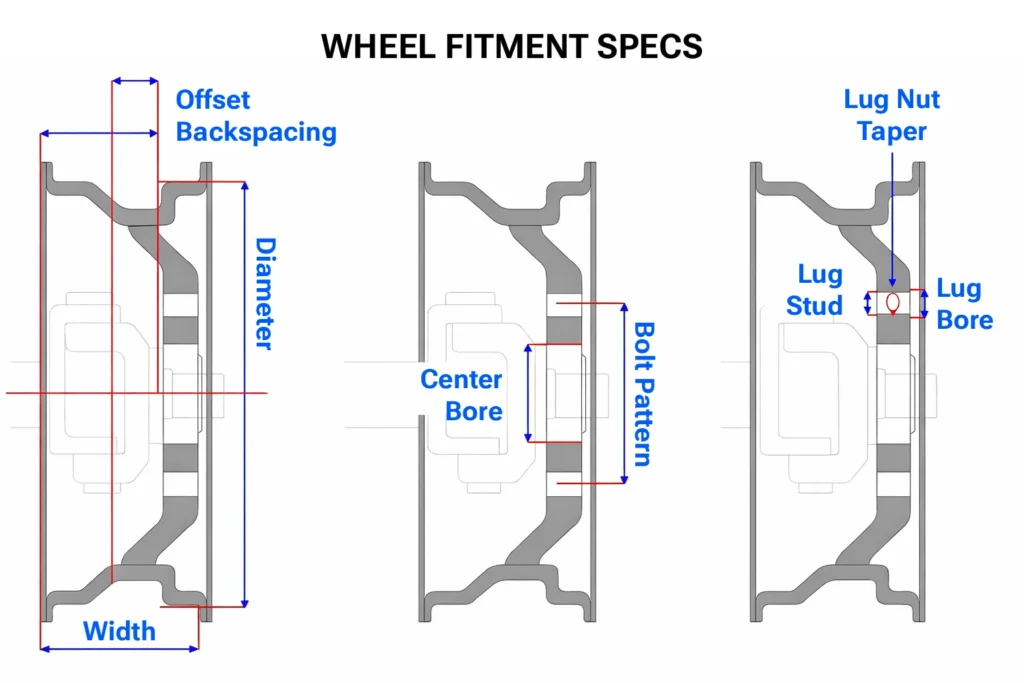
Width — The wheel’s measurement from inner lip to outer lip, in inches. Wider wheels need more clearance on both sides.
Offset — The distance from the wheel’s centerline to the mounting surface, in millimeters. This controls how far inward or outward the wheel sits. Detailed guide to wheel offset and how it affects fitment
Backspacing — The distance from the mounting surface to the wheel’s inner lip, in inches. This describes the same position as offset, but from a different reference point. (Offset vs backspacing explained)
How to Read Wheel Fitment Specs
Wheel Size Compatibility Specs (Allow Mounting)
These three measurements determine if the wheel physically bolts to your hub.
Bolt Pattern — The number of lug holes and their spacing. A 5×114.3 pattern means 5 lugs on a 114.3mm circle. Must match exactly.
Center Bore — The hole in the middle of the wheel. Must match or exceed your vehicle’s hub diameter to prevent vibration.
Diameter — The wheel’s height at the tire bead, in inches. Your tire must match this number. A 17-inch tire only fits a 17-inch wheel.
Position specs control fitment. Compatibility specs allow installation.
Position Specs vs Compatibility Specs
Position (Controls Clearance) | Compatibility (Allows Mounting) |
|---|---|
Width | Bolt Pattern |
Offset | Center Bore |
Backspacing | Diameter |
How Wheel Fitment Actually Works
Forget the numbers for a moment. Think about physical space.
The Box Concept
Your wheel well is a fixed space—like a box. The inside wall is your suspension and brakes. The outside wall is your fender. The wheel must fit inside this box without touching either wall.
Wheels don’t fit because of size, they fit because of position.
Two wheels can share the same diameter and width but fit completely differently. The difference is where they sit inside that box.
Three Clearances You Must Protect
Inward clearance is the gap between the wheel’s inner lip and your suspension, brakes, and struts. Too little means metal grinding metal.
Outward clearance is the gap between the tire and your fender. Too little means rubbing every time you hit a bump.
Turning clearance is the space your tire needs when steering. Wheels that clear straight may rub at full lock.
Want to calculate your wheel clearance in detail? Visit the Wheel Wheel Backspace Offset Calculator & Visualizer
Width and Offset: How They Control Position
These two specs work together to determine where the wheel sits. Change one, and the whole equation shifts.
How Width Affects Position
A wider wheel doesn’t just grow outward. It grows in both directions equally.
Add one inch of width, and the wheel extends 12.7mm inward and 12.7mm outward. Your suspension clearance shrinks. Your fender clearance shrinks. Both sides lose space.
How Offset Affects Position
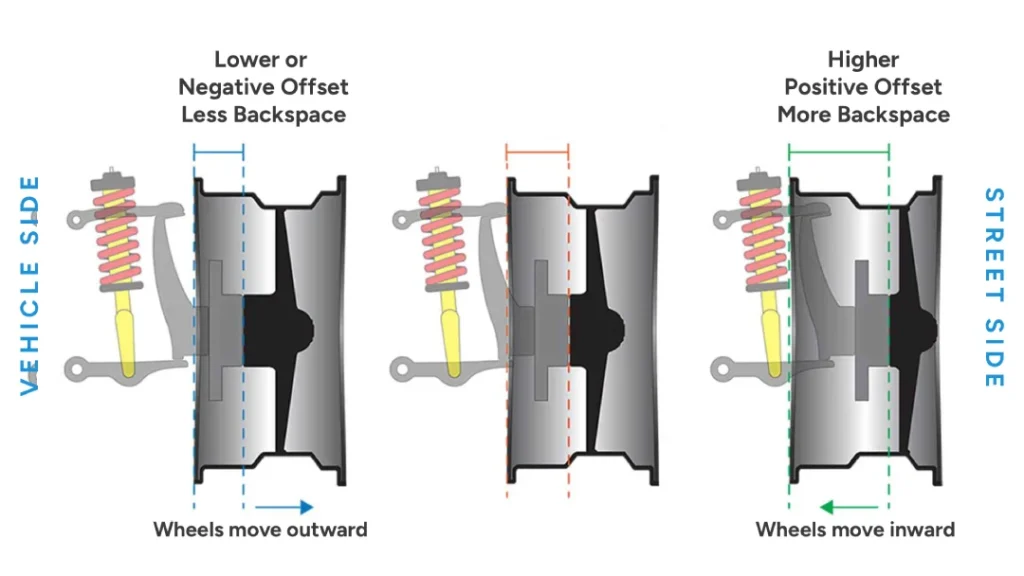
Offset shifts the wheel left or right within the wheel well.
Higher offset (like +45) pushes the wheel inward, toward the suspension.
Lower offset (like +20) pushes the wheel outward, toward the fender.
A 10mm offset change moves the wheel exactly 10mm in one direction.
The Combined Effect
- Same width + different offset = different fit
- Different width + same offset = different fit
Example:
What Makes Wheels Rub?
Rubbing follows predictable patterns. (Full rubbing causes guide)
Inward Rubbing
The wheel’s inner edge contacts suspension arms, struts, or brake calipers. Causes: too much width without enough positive offset, or aggressive spoke designs that don’t clear brakes.
Outward Rubbing
The tire contacts the fender or fender liner. Causes: too much negative offset, too much wheel width, or oversized tires.
Turning Rub
Everything clears when driving straight. But at full steering lock, the tire catches the inner fender liner.
Compression Rub
Your wheel clears at normal ride height. But when you hit a bump, the suspension compresses and the fender drops closer to the tire.
The Real Culprit
Tires cause more rubbing than wheels.
A wheel might fit perfectly. But mount an oversized tire, and you’ve created a clearance problem. Always check tire dimensions, not just wheel specs.
Rubbing almost never means the wheel diameter is wrong—it means the position is wrong.
When You Can Ignore All The Math
Not every wheel purchase requires calculations.
Direct OEM replacement — Same specs as factory. No math needed. It fits.
Same width, same offset range — Staying within ±5mm of factory offset on identical width wheels. No clearance change.
Factory tire size — If you’re not upsizing tires, you eliminate the most common rubbing cause.
If you’re replacing damaged wheels with identical specs, skip the formulas. Bolt on and drive.
The math matters when you’re changing width, offset, or tire size. That’s when position shifts.
How To Know If Wheels Will Fit Before Buying
Follow this 5-step check to know if wheels will fit your car before buying.
Step 1: Find Your OEM Specs
Check the driver’s door jamb sticker or your owner’s manual. Note the factory wheel size, bolt pattern, and offset. This is your baseline.
Step 2: Calculate Width Change
Subtract your OEM width from the new wheel’s width. Multiply the difference by 12.7mm. That’s how much space you’ll lose on each side.
Step 3: Calculate Offset Change
Subtract the new offset from your OEM offset. A positive result means the wheel moves outward. A negative result means it moves inward.
Step 4: Check Brake Clearance
Larger brakes need more spoke clearance. Look up your brake caliper dimensions. Many aftermarket wheel listings include brake clearance diagrams—use them.
Step 5: Verify Tire Size
Your tire’s section width and sidewall height affect clearance more than wheel dimensions. Confirm the tire you plan to mount fits within your available space.
If inward clearance is safe and outward clearance is reasonable, the wheel fits.
Safe vs Aggressive Fitment
Not all fitment is equal. Know where your setup falls.
OEM+ (Daily Driver Safe)
Staying within 10mm of factory offset and matching OEM width. Maximum compatibility, no modifications needed. Perfect for daily drivers.
Flush Fitment
The tire sidewall aligns with the fender edge. Sporty appearance without rubbing. Requires careful spec selection but rarely needs modifications.
Aggressive Fitment
Wheel and tire extend past the fender slightly. May require fender rolling or minor trimming. Not ideal for rough roads.
Stance Fitment
Extreme negative offset with stretched tires. Requires significant modification—fender work, camber adjustment, raised ride height. Not recommended for daily driving.
No judgment. Just know the consequences before committing.
Common Mistakes That Damage Cars
These errors happen constantly. Avoid them.
Wrong Bolt Pattern
A 5×114.3 wheel will not fit a 5×120 hub. Even small differences cause dangerous misalignment. Never force a bolt pattern.
Skipping Hub Rings
Wheels with oversized center bores need hub-centric rings. Without them, you’ll experience vibration and uneven lug load. Rings cost a few dollars—bearings cost hundreds.
Extreme Offset Jumps
Changing the offset by 25mm+ stresses wheel bearings, alters steering geometry, and accelerates wear. Stay within 15mm of factory offset when possible.
Oversized Tires
A 275 tire on a wheel that cleared with 245s will rub. Tire section width and sidewall height matter as much as wheel specs.
Stacking Spacers
One quality spacer is fine. Stacking multiple thin spacers creates flex, vibration, and potential failure points. Use the correct offset wheel instead.
Quick Mental Fitment Math
Use this simple wheel fitment formula to estimate position change:
Width change ÷ 2 ± offset change = position shift
Take half the width change (in mm). Add or subtract the offset change. The result tells you how far the wheel moves outward.
Example:
Confidence Close
Fitment isn’t magic. It’s simply measurement.
You now understand which specs control position and which allow mounting. You know how width and offset interact. You can spot common mistakes before making them.
You don’t need forums. You don’t need guesswork. You can look at the specs and know.
Wheels don’t fit because of size—they fit because of position.
Now you can choose wheels based on style, not fear.
FAQs About Wheel Size & Fitment
How do I know what size wheels fit my car?
Check your door jamb sticker or owner’s manual for factory specs. Match the bolt pattern exactly. Stay within 15mm of OEM offset and verify clearance if changing width.
What happens if the wheel offset is wrong?
Wrong offset causes rubbing, accelerates bearing wear, and alters handling. Too much positive offset hits suspension. Too much negative offset hits fenders.
Can I put wider wheels on my car?
Yes, if you account for clearance loss. Each inch of added width consumes 12.7mm of space per side. Adjust offset and check both inward and outward clearances.
Do I need hub-centric rings?
If your wheel’s center bore is larger than your vehicle’s hub, yes. Hub rings center the wheel and prevent vibration. They’re inexpensive and essential.
How much offset difference is safe?
Most vehicles tolerate 10–15mm offset change without issues. Beyond that, expect potential rubbing, altered handling, and increased bearing stress.
What does wheel fitment mean?
Wheel fitment is the relationship between the wheel’s mounting position and the available space inside the wheel well. A wheel fits when it clears suspension and fenders during all driving conditions.
Can I install wheels from a different model on my car?
Yes, if the bolt pattern matches and the offset is within a safe range. Always verify clearance before swapping wheels between models.